
The Replacements' Let It Be
Four decades on, The Mats’ masterpiece still sounds like falling apart and holding on.

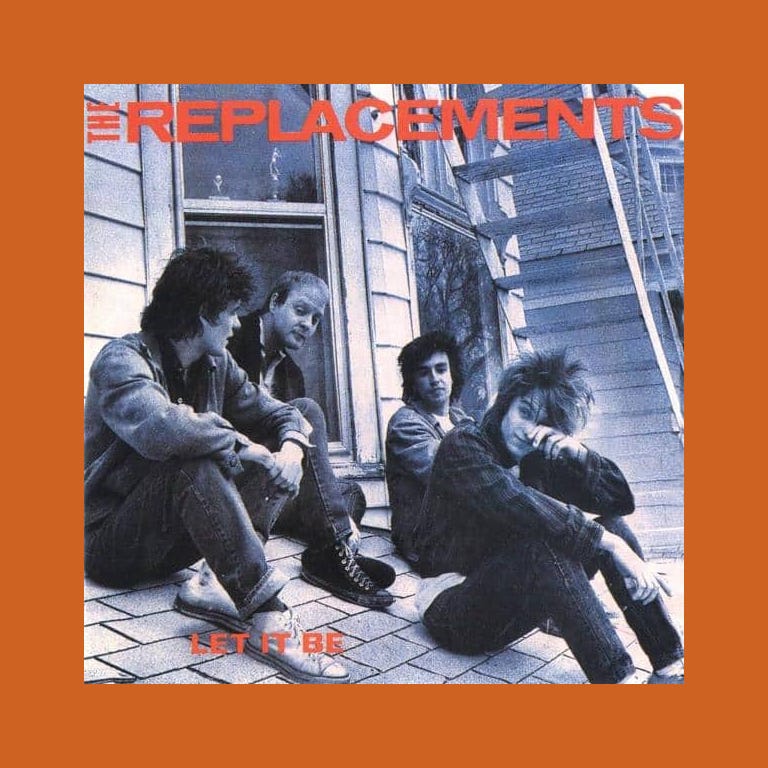
I remember walking through Manchester on a wet autumn evening in 2016, searching for a place called HOME. The name felt like a joke—a cinema and gallery tucked somewhere behind the railway arches, invisible no matter how many times I checked Google Maps. In my headphones, The Replacements’ ‘Unsatisfied’ was playing, and as it faded out, Paul Westerberg’s voice collapsed—not with defiance but with exhaustion. At the time, I was slipping into what would become the worst depressive episode of my life, and I recognised that exhaustion immediately. He sounded worn out by the same performance I was barely keeping up with—the daily act of seeming fine.
In the weeks that followed, I kept returning to ‘Unsatisfied.’ After hearing it that night, it felt like the only thing that still recognised me, and as the depression deepened, it—and the album it came from, Let It Be—became something to hold onto. It was the only record that seemed to understand the hopelessness that had started to colour everything, offering comfort I couldn’t find anywhere else. The comfort wasn’t in hope but in honesty—it didn’t pretend to be okay. The music wavered and stumbled, weary but alive, like someone still trying even after they’d run out of reasons to. Most nights, I’d sit in my room with a Sudoku book, playing the album, waiting for it to tell me something new, but it never did. Still, it never left either, and there was comfort in that constancy.
Eventually, the numbness began to lift, and I started to really listen. Over time, I began to hear the band differently, and realised the sound I’d been clinging to wasn’t an accident but a reflection of who they were. The Replacements never tried to clean up or hide their cracks; they played like they were falling apart and holding on at the same time, trying to make something whole out of the chaos. They were kids who wanted to trash everything, just as they were starting to see the wreckage of their lives. Each song feels like it’s holding its breath between collapse and release, turning imperfection into proof of life.
Even after I started to feel better, the album stayed with me. It followed me out of that darkness, not as a reminder of it but as a companion that had survived alongside me. All these years later, that feeling hasn’t faded. Let It Be still sounds like it’s fighting itself—trying to outsmart its own emotions and failing gracefully. There’s beauty in that struggle: a band half embarrassed by sincerity, torn between sneer and vulnerability, never fully committing to either. It’s not nostalgia that keeps me listening; it’s the honesty of not knowing what I want. That tension—the refusal to choose between irony and emotion—still feels like a confession of my own.
Each time I return to it, I hear something different. The songs keep shifting, reflecting whatever version of myself happens to be listening. What once felt like despair now sounds more like persistence. Every listen feels like overhearing an argument between ambition and self-doubt—between the part of you that wants to make something real and the part that can’t stop mocking yourself for trying, the same argument the band can’t help having out loud. The Replacements were simply kids who wanted to grow up without ever admitting they cared. You can hear it in the way ‘I Will Dare’ trips over its own optimism, or in ‘Androgynous’ as Westerberg’s slurred tenderness makes vulnerability feel accidental. Listening to these songs, I recognise a bit of that clumsy bravery in myself—the awkward, daring experiments of adolescence, when you stumble forward without knowing you’ll land, but try anyway.
Now, when I go back to Let It Be, I hear how young they were, and how much of that mess was the sound of possibility. There’s a kind of innocence in the chaos, a sense they were still figuring out who they wanted to be. Their songs lurch and fracture, held together more by feeling than precision. But the mess wasn’t only musical; it bled into the way they saw the world. They’d mock “phoney rock ’n’ roll” in one song, then write something like ‘Sixteen Blue,’ a track with more compassion than most bands manage in their entire careers. That mix of defiance and tenderness felt familiar—the same uneasy balance I was trying to live with myself. Over time, that feeling deepened and changed. At twenty-nine, I thought ‘Unsatisfied’ was about giving up; now it feels more like refusing to settle for a life that doesn’t make sense. These days, I hear less despair in it and more determination—a defiance that feels earned. I still think about the first time I heard it, and how everything that followed seemed to start there.
Eventually, I did find HOME. I sat through a film I barely remember, then walked down Oxford Road to the train station beneath a black sky, drizzle still falling. I played Let It Be again on the train home. When it got to ‘Unsatisfied,’ the words hadn’t changed, but something in me had. It didn’t promise relief or clarity, just company—the kind that asks nothing of you but to keep listening, the kind that stays even when you can’t. Sometimes that’s enough. It didn’t ask me to get better; it just understood what it felt like not to.
I still think about that walk whenever I listen to Let It Be—about being lost in a city that didn’t care, searching for a place named after something I couldn’t find in myself. That’s what The Replacements captured better than anyone: how you can feel wrecked and still keep moving, half out of instinct, half out of spite. Their songs were never about getting things “right”; they breathe with a humanity that can’t be faked. The real miracle of Let It Be is that the tape can be remastered, but the band can’t—and wouldn’t, because the mess is the point. That’s why I keep returning to it: for all its wrong turns, it still feels like a kind of home.
Enjoyed this piece? It’s free, but if you’d like to keep the Wi-Fi on, consider upgrading to a paid subscription, making a donation, or just buy me the new reissue, and we’ll call it even.